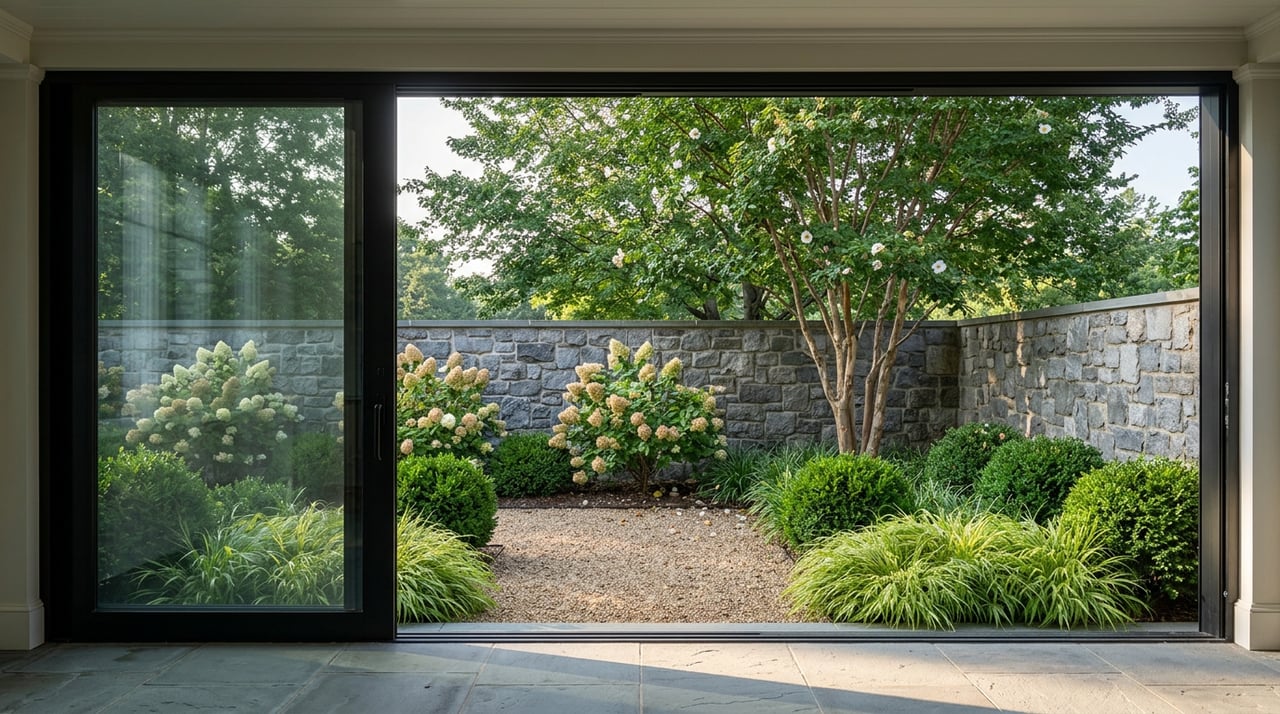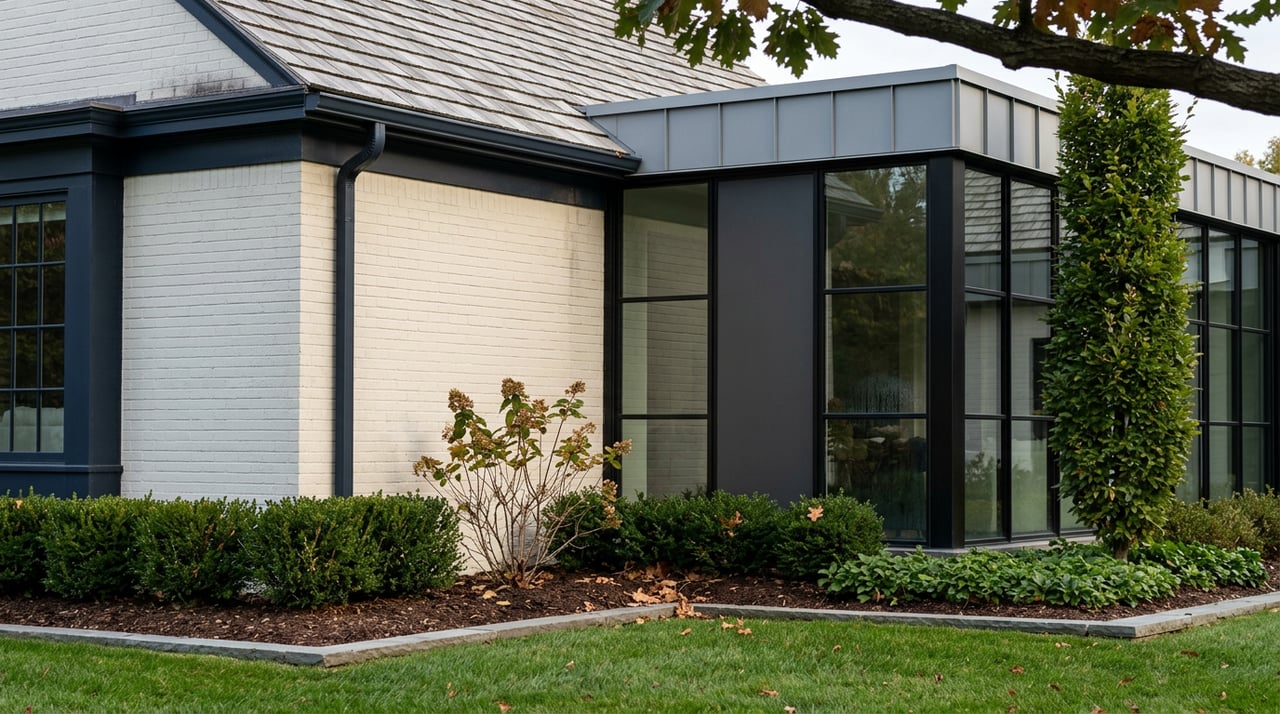
When architect David Stern and designer Diane McCafferty took on a project in Wellesley for a couple who wanted a thoroughly modern home, terrace, pool, pool house, tennis court and all, they ran into a 1930s center-hall Colonial already standing on the lot. The Wellesley Historical Commission had listed it as preferably preserved, which meant any attempt to tear it down would trigger a 12-month delay under the town's demolition review bylaw. Stern didn't fight the designation. He redesigned around it, folding a chunk of the original structure into a limestone-clad contemporary addition that Boston Magazine featured this past May. The house that resulted, part traditional brick, part glass-and-steel modern, is one of the more interesting builds to come out of MetroWest in years.
That project is a useful case study for a reason that has nothing to do with architecture. It shows what actually happens when a Wellesley teardown plan meets Article 46C, the town's Historic Preservation Demolition Review bylaw. And it raises a question worth asking before you write an offer on a pre-1950 Wellesley property: how often does this actually happen, and how much should it change your timeline?
The Stat People Repeat, and What It Leaves Out
At a Wellesley Historical Commission meeting in July 2024, a commissioner noted that the town has 560 houses built before 1900, and only 19 of them have gone through the demolition delay process since the bylaw took effect in 2017. Said out loud, that sounds like a rare event. Nine years, 19 cases, out of a town with thousands of single-family homes.
But that number describes a narrower slice of Wellesley housing than most buyers assume. The bylaw's eligibility threshold isn't 1900. It's December 31, 1949. Any dwelling built on or before that date, or used as a dwelling within three years of the application date, falls within the bylaw's reach according to the town's own Demolition Review Bylaw Information page. That covers a much wider band of housing stock than the pre-1900 antiques the 560-home figure describes. It includes the postwar Capes and center-hall Colonials that fill neighborhoods like Wellesley Farms and the streets around the Fells area, the kind of house that shows up constantly on Wellesley's active listings today, not just in a handful of landmark-status homes.
How the Review Actually Runs
If a property owner wants to demolish or substantially alter a building old enough to qualify, here's the sequence:
- The owner applies to the Planning Department for an Eligibility Notice, confirming whether the building was constructed on or before December 31, 1949.
- If it's proposing to demolish or envelope less than half the structure, the owner can submit calculations showing the project falls under that threshold and avoids triggering the bylaw entirely. Most straightforward renovations and additions don't come close to this line.
- If the building is eligible and the owner still wants to proceed with a full or majority demolition, the Historical Commission schedules a public hearing within 45 days of the application.
- At that hearing, the Commission decides whether the dwelling should be "preferably preserved." If it votes no, the Building Department can issue permits without further delay. If it votes yes, a 12-month delay is imposed before any demolition permit can be issued.
- Owners facing that 12-month clock can apply for a waiver to shorten it, and the Commission has granted waivers before.
None of this is a ban. A preferably preserved determination doesn't stop a demolition, it postpones one. But a 12-month postponement lands very differently depending on where you are in a transaction. It's a footnote if you're two years out from breaking ground. It's a serious problem if your construction loan, your architect's contract, or your family's move timeline assumed you'd have a permit in hand by spring.
The Four Months That Tell a Different Story Than the 19-Case Number
Look at what happened right after the bylaw took effect in August 2017. In its first four months of operation, the town fielded 37 Eligibility Notice applications. Of those, 11 were built after the 1949 cutoff and didn't qualify. The remaining 22 were eligible, and the Historical Commission determined that 7 of them should be preferably preserved, triggering the 12-month delay. Five of those seven owners applied for waivers to shorten the wait.
Run the math on just that stretch: 7 preferably preserved outcomes out of 22 eligible applications is roughly a one-in-three hit rate, in four months, across the full pre-1950 population, not the narrower pre-1900 subset the 560/19 figure describes. Reporting from that period named specific addresses where this played out, including a house on Walnut Street that was reviewed and cleared, homes on Crestwood Drive in Wellesley Farms that were built in the 1950s and fell outside the bylaw's date cutoff, and a fire-damaged house on Cleveland Road in the Fells area that had already changed hands multiple times before finally coming down.
The takeaway isn't that Wellesley's bylaw is a trap around every corner. It's that the "only 19 since 2017" figure and the "roughly one in three, early on" figure are both true, and they're describing different populations. If you're buying a house built in 1938 or 1947, the relevant comparison is the second number, not the first.
Still Active, and Possibly About to Change
This isn't a dormant rule from 2017. The Historical Commission worked through cases at 1 Kendall Road and 20 Tappan Road in 2024 and 2025, each requiring a full public hearing and a formal vote before an owner knew whether they could proceed. Both were ultimately cleared to move forward without a delay, but both took months of process to get there, which matters just as much for a closing timeline as the delay itself would.
At that same July 2024 meeting, commissioners discussed forming a subcommittee to study changing the demolition delay bylaw, a signal that the Commission itself sees the current framework as unsettled. As of that meeting, no change had been adopted, but a buyer signing a purchase and sale agreement on a pre-1950 home with an eye toward eventually rebuilding is making assumptions about a rule that town officials were, at minimum, actively reconsidering.
What to Actually Check Before You Sign
If you're touring pre-1950 Wellesley homes with any intention of a future teardown, addition beyond half the structure, or major rebuild, a few things are worth confirming before you're under agreement, not after:
- Confirm the actual construction year through the Assessors' records or pre-2009 building permit files at Town Hall. "Old-looking" and "eligible under the bylaw" aren't the same thing, and the cutoff is a specific date, not a general impression of vintage.
- If your plans involve anything close to full demolition, request the Eligibility Notice during your due diligence period, not after closing. The 45-day hearing scheduling clock doesn't start until you apply.
- Build your financing and construction contingencies around the possibility of a 12-month delay, not the assumption that you'll clear review quickly. Five of the seven owners delayed in the bylaw's first months needed a waiver to move faster, and waivers are not guaranteed.
- Talk to your architect early about a build-around option. The Stern and McCafferty project shows that a preferably preserved determination can become a design opportunity rather than a dead end, but that only works if it's part of the plan from the start, not a scramble after a Commission vote.
FAQ
Does the bylaw apply to a kitchen renovation or a second-floor addition? Generally no. If the project demolishes or alters less than half the building's envelope, an owner can submit calculations showing the work falls under that threshold, which keeps most standard renovations and additions outside the review process entirely.
Can I speed up a 12-month delay if my house is deemed preferably preserved? Yes, through a waiver application to the Historical Commission. The town's own data shows this is a common response, not a rare exception, but a waiver is not automatic and depends on the Commission's assessment of your revised plans.
If my home already went through review once, does it stay cleared forever? Not necessarily. Determinations can carry a time limit. In one 2024 case, a property that had previously been found not preferably preserved returned to the Commission because the prior ruling's grace period had expired, and it went through the process again.
Buying or selling a pre-1950 home in Wellesley is rarely just a real estate transaction. It's also a conversation with the town about what gets to change and how fast. That's exactly the kind of technical terrain Jennifer Fish was built to work in, drawing on a construction background that goes back generations to help clients read a property's zoning and preservation exposure before it becomes a closing-day surprise. If you're evaluating an older Wellesley home with renovation or rebuild potential, book an appointment before you write the offer, not after.