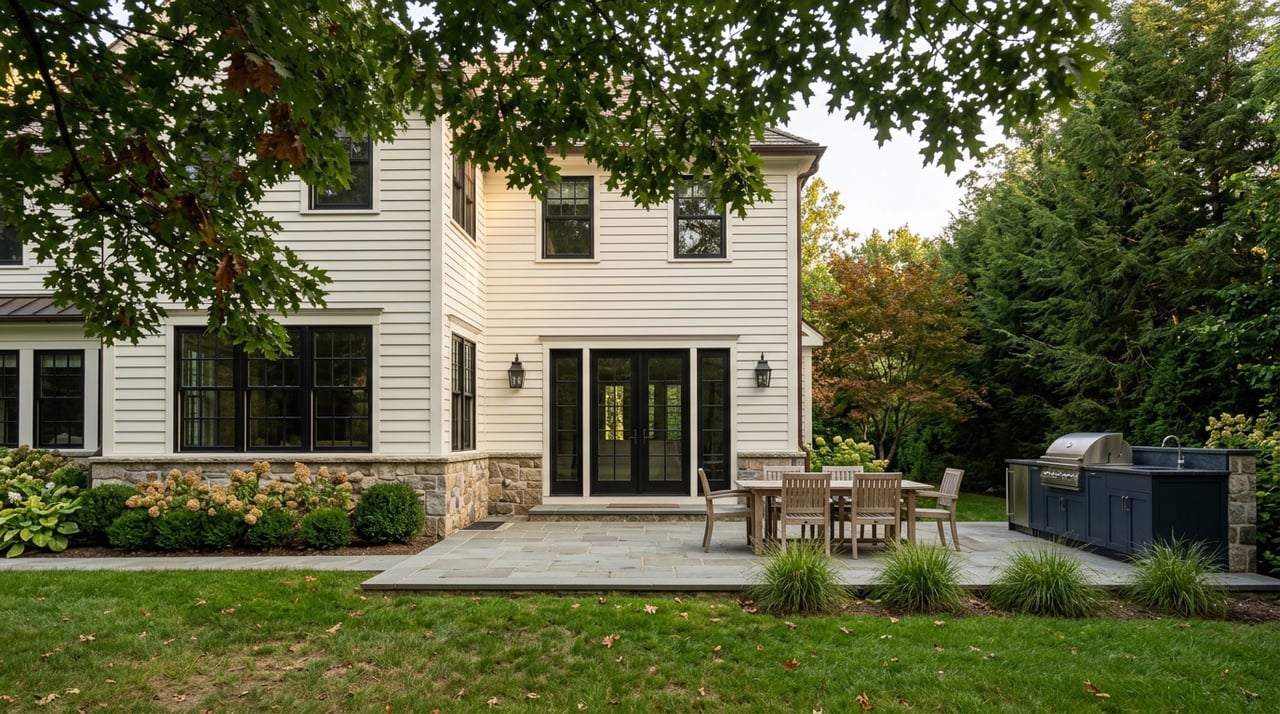
Is Weston’s luxury market still sprinting, or is it settling into a more deliberate pace? If you are weighing a sale, a purchase, or an upgrade, you want clear signals, not noise. In early 2026, Weston remains one of Greater Boston’s top-tier suburbs, yet the way buyers judge value is changing. In this guide, you will learn what is driving demand, how privacy and acreage are being priced, and how to position yourself for success. Let’s dive in.
Where Weston sits now
Weston’s median sale price sits at about $1,517,500 as of January 2026, according to Redfin. The market reads as somewhat competitive, with longer days on market than the peak years of 2021 and 2022. The takeaway is simple. Weston is still a high-value market, but buyers have more time and expect more clarity on condition and features.
Ultra-luxury listings cluster around the 02493 zip and South Side enclaves near conservation land and the golf club. That segment behaves like a micro-market. A single trophy listing can skew headline stats, so you should read median town numbers as context rather than a precise indicator for an eight-figure estate.
Middlesex County context
At the county level, indicators through late 2025 and early 2026 show stabilizing prices and rising inventory. Compared with the frenzied conditions of the pandemic era, that means more options for buyers and a greater premium on presentation for sellers. Weston still benchmarks above most nearby towns, but the gap tightens when condition, amenities, and land quality are equal.
What luxury buyers want now
Buyer priorities have sharpened. Press coverage of Greater Boston luxury buyers points to a set of features that now feel like essentials rather than extras. You can see these in many current Weston listings and recent buyer requests.
- Turnkey, move-in ready condition. Buyers will pay more for homes that feel complete, since contractor backlogs and time costs are real. Boston-area luxury market trends highlight this premium.
- Flexible floor plans and multi-generational options. Dual primary suites, guest wings, and ADUs are in demand for privacy and autonomy.
- Dedicated home offices and sound-controlled work zones. A home office remains a top remodel focus for many households, reinforcing its value signal to buyers. Home office remains a top remodel focus.
- Outdoor living and wellness. Pools, covered outdoor rooms, and spa elements like saunas and cold plunges often show up in the strongest offers, especially when delivered in a cohesive, low-maintenance package.
- Privacy plus connectivity. Buyers want “connected seclusion,” which means deep setbacks and gates, yet easy access to town and major routes.
How features shape value
Move-in ready estates with purpose-built offices, quality outdoor programs, and multi-gen potential tend to hold price and attract more qualified offers. Large but dated homes that require heavy, uncertain renovations see longer marketing windows and more price sensitivity. The recent Boston-area coverage underscores that turnkey and wellness-forward features can shift outcomes meaningfully.
What privacy costs in Weston
The price of acreage in Weston spans a wide range based on improvements, setting, and condition. Recent listing samples illustrate implied asking prices from about $0.85 million per acre to about $5.4 million per acre. For example, large South Side or golf-club-adjacent estates like 4 Willow Road and 9 Atlas Lane show per-acre asks above $5 million, driven by architectural pedigree, adjacency, and presentation. Larger parcels like 180 Ash Street and 3 Idlewile Lane demonstrate lower per-acre asks when spread across bigger acreage or when finishes are less recent. A 2025 example around South Avenue illustrated an implied ask under $1 million per acre, reflecting a broader lot with a different set of improvements.
These are list figures, not sold prices. Closed-sale evidence shows a different picture. A notable recorded sale at 67 Byron Road closed at about $10.3 million on roughly 7.5 acres several years ago, which translates to about $1.37 million per acre at the time. The lesson is to treat $ per acre as directional only. Built quality, usability of the land, conservation adjacency, and readiness of infrastructure all drive the actual outcome.
What drives the spread
- Turnkey condition versus renovation scope.
- Architectural significance or historic value.
- Views and adjacency, including conservation land and the country club.
- Permitted program, such as guest houses or ADUs.
- Immediate utility, including road access, septic status, and connectivity.
Pricing and leverage in 2026
Town-level data shows a cooler, more balanced market than 2021 and 2022. Buyers in the mid-luxury tier often have a bit more leverage due to increased days on market, while rare or fully dialed-in trophy properties can still command strong attention. Nationally, the luxury segment moderated in 2025, which supports a pricing approach that assumes slower absorption than the pandemic peak.
- For sellers. Price for comparability in the first 30 to 60 days unless your estate is truly unique and merchandised as such. Invest in pre-list preparation so the home feels move-in ready. Small gaps in finish quality can create big negotiation drag in today’s environment. The Boston Globe’s reporting reinforces the premium on turnkey and wellness features.
- For buyers. Anchor negotiations in the recent closest-matching closed sales, then adjust for verified renovation scope and deferred maintenance. Budget conservatively for contractor timelines. In Weston, also factor Massachusetts septic rules. Review the MassDEP Title 5 septic regulations early in diligence, especially on larger lots.
Due diligence checklist for acreage and estates
Buying or selling significant acreage in Weston requires a clear, methodical review. Use this checklist to stay ahead of issues that affect price and time to close.
- Septic and Title 5. Confirm current system status, past maintenance, and replacement feasibility. Start with the MassDEP Title 5 septic regulations.
- Conservation, wetlands, and reservoir setbacks. Identify resource areas and any restrictions on new structures, pools, or additions.
- Easements and access. Verify driveways, shared private roads, utility easements, and any encroachments.
- Utilities and connectivity. Check electrical capacity, gas availability, fiber or high-speed internet, and generator infrastructure.
- Permitted improvements. Research status and feasibility of guest houses, ADUs, pool houses, and sports courts.
- Systems and envelope. Review age and documentation for roofs, windows, HVAC, pool equipment, and major mechanicals.
- Landscape and hardscape. Estimate recurring maintenance for long drives, gates, irrigation, and specialty plantings.
- Property tax history. Understand assessments and any recent changes tied to improvements.
Smart upgrade priorities before you list
If you are preparing a Weston estate for market, focus your investment where buyers notice most now.
Complete the house. Resolve punch-list items, repaint high-traffic areas, update lighting, and tune mechanicals so the home feels worry-free on day one.
Define dedicated workspaces. Stage a clear, well-lit office with strong connectivity and sound control. Buyers scan for this immediately.
Elevate outdoor living. If the neighborhood supports it, tighten privacy landscaping, refresh the pool setting, and add or refine an outdoor kitchen. Cohesive, low-maintenance design wins.
Explore ADU feasibility. A permitted guest suite or carriage house can widen your buyer pool. Plan with permits and documentation, not just concepts. Reporting on Boston’s luxury market shows buyers value multi-generational solutions and turnkey wellness features, which can strengthen pricing when executed well.
Examples: how features drive price impressions
These illustrative Weston examples show how land, adjacency, and finish level shape buyer perception. Figures reflect publicly marketed listings and should be treated as directional until matched with closed comps.
4 Willow Road. An English-Revival estate adjacent to the golf club on about 6.33 acres. The implied per-acre ask sits around the mid-$5 million range. Architectural pedigree, immediate adjacency, and curated presentation lift the land multiple.
180 Ash Street. A large South Side property of roughly 18.7 acres with an implied per-acre ask around the high-$1 million range. More acreage spreads the land multiple, and value centers on total program and future potential rather than raw $ per acre alone.
3 Idlewile Lane and 275 South Avenue. Gated multi-acre estates that illustrate per-acre asks around the low-to-mid $1 million range and below $1 million per acre respectively. Condition, program, and setting explain the spread as much as lot size.
Historical lens. 67 Byron Road closed at about $10.3 million on roughly 7.5 acres several years ago, translating to about $1.37 million per acre. Today’s pricing should adjust for improvements since that time and for the stronger preference for turnkey delivery.
Work with a construction-informed advisor
In Weston’s luxury segment, details decide outcomes. The right pricing, the right pre-list improvements, and a presentation that meets today’s buyer priorities can shift your net by seven figures. If you want guidance grounded in real construction knowledge and amplified by global marketing reach, connect with Jennifer Fish. You will get a boutique, one-to-one advisory experience backed by a multi-generational building background and Sotheby’s international distribution.
FAQs
How much does privacy cost in Weston in 2026?
- Current listing samples imply about $0.85 million to $5.4 million per acre depending on improvements, adjacency, and turnkey condition. Use the closest recent closed comps for firm valuation and treat $ per acre as directional only.
Do wellness features like a sauna or cold plunge affect price?
- Yes, in the luxury tier these features help marketability and can support stronger pricing, especially when part of a cohesive, turnkey package, as noted in Boston-area luxury market trends.
Are ADUs worth considering for Weston luxury homes?
- Often yes. ADUs meet multi-generational needs and widen the buyer pool. Verify zoning and permits early, and document approvals clearly for buyers.
How competitive is Weston versus nearby towns right now?
- The market is still premium but more balanced than in 2021 and 2022. County-level indicators show stabilizing prices and more inventory, so condition, features, and land quality decide who gets top-of-market results.
What should I check first on an older estate with acreage?
- Start with septic status under the MassDEP Title 5 septic regulations, then review conservation setbacks, easements, utilities, and documentation for major systems. These items affect both price and time to close.